
Original Year of Release: 1920
Genre: Horror/German Expressionism
Rating: 4/5
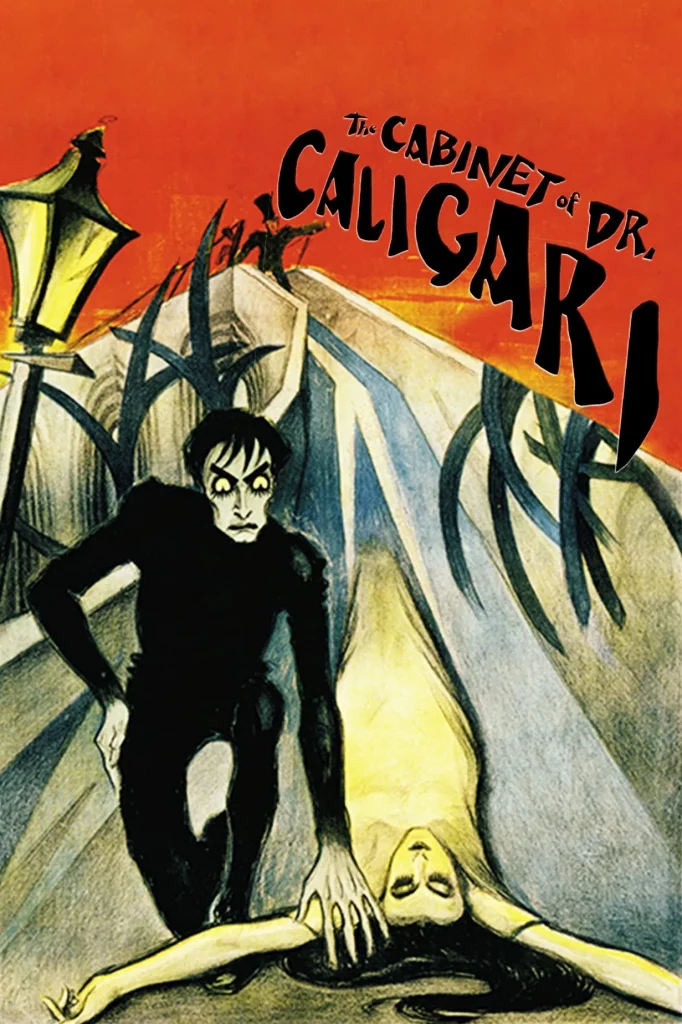
The Cabinet of Dr. Caligari is a film whose impact is felt more than it is known. Tim Burton loves himself these jagged angles and his fairground imagery. Cesare is the vogue look for the artsier goth kids, as well as for one of my best assassins – Brother Strangler. Now that I think about it, Brother Strangler does like his clove cigarettes and is impartial to the Cure too.
Incidental music for this specific streaming edition of the movie was odd, seemed suspiciously electronic, almost like they were playing to the audience by including a darkwave sounding ambient track and looping it. But without going down a rabbit hole, we can assume that maybe the incidental music of the original is lost media and throw them a bone. Because Orcus is not interested in the musical equivalent of some namby pamby goblin tiptoeing through the night before the movie shows a scrawny European straight out of his campus studio pull a sadistic expression as he strangles a kewpie doll looking girl in white in a portrait of sublime human tragedy – he is there to see the portrait in all its morbid decadence. And this movie does have stunning visuals. While the sets look cheap by today’s standards, the unearthly angles and matte paintings they have in the background is true art. And as far as art cinema goes, the story is good, and even just reading the words and following it visually, you jump and chuckle in glee at the sordid violence, and the twists and turns go like a knife in the gut. And do you know how thick Orcus the Vile’s stomach is? There are those who called him Orcus Ironguts for surviving no less than three poisoning attempts in one month while reigning as Warlord in the hinterlands of Bulgar.
It goes to show you what timeless storytelling can do. Even the characters have distinct motivations, and the film plays well off the manias of Franzis as he tries to expose Caligari, as well as the Doctor himself. One qualm Orcus has with characters are we don’t know as much about the motivations of Dr. Caligari. I understand the desire to keep him a mystery and let his mystique make him more memorable and deadly, but we need to know more about his motivations. To be fair, it doesn’t make the movie lesser, but it would do additional good to the film.
And that is the Cabinet of Dr. Caligari. If modern assembly line cinema is slop to the through this is the sinful fondue of forbidden tastes and experimental cuisine. It is the antithesis of what film became later, and like its peer Nosferatu, has had a monumental cultural legacy that endures to this day.
Orcus hears there is a remake. Perhaps it is time to muster my Legions and set them on the warpath again so we may see if there is finally a remake that allows us to claim that we “revisited an old classic” without lying through our teeth.
Leave a Reply