Welcome to my Domain

  • Retrospective: Open the Gates

    By: Manilla Road

    Original Date: December 1984

    Rating: 4.5/5

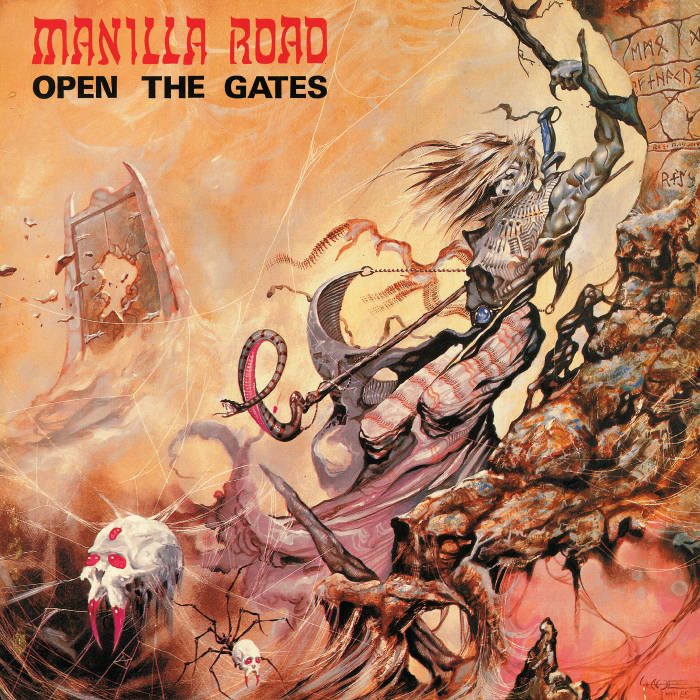
    Compared to the albums that preceeded it, Open the Gates takes a slightly different direction. Far from being the upbeat, somewhat noodle happy guitar riff-fest we had before, this album is a grittier and harsher with distinct thrash influences that occasionally crop up.

    Once more Manilla Road scoffs at formula and repetition, while the riffs aren’t the most varied and progressive if you played me three seconds from any song on this album, I would instantly be able to name the song its from. Each song has its own tone and feel, and with tracks like “Witch’s Brew” and “the Ninth Wave”, Manilla Road make it clear that they can still produce brooding and somewhat sinister tracks for the sake of narrative purpose.

    “What of the lyrics?” I hear readers ask. “Does Manilla road still engage in their usual pulpy cheese when they compose their lyrics?” Well if you are inclined to only take a band seriously who write serious lyrics, then yes, you will not be disappointed with Manilla Road’s Open the Gates. The lyrics are a bubbling druidic cauldron of inspiration with reagents taken from Viking myth alongside Arthurian lore and even astrology. There is even a few references to Roman mythology. If we look at the kind of influences Manilla Road was associated with later in their career, this album is the point where that world-building begins.

    As on all their past albums, Shelton delivers the vocals with conviction and confidence, and even if his voice isn’t the most pleasant on the ears, its honesty and flair is unmistakable. The production here isn’t as raw as the other extreme albums that came out around this era, and that just shows how much care Shelton and co took to deliver the best product possible. With it being an underground release from a small record label, it would be too easy to go for that cold raw feel of the First Wave of Black Metal, but instead all the instruments can be heard and the atmosphere hits home when it needs to.

    We also need to address the beginning of the change in the band’s musical direction. I don’t think it is a conscious change in sound to make the music more accessible. There is still too much of their trademark sound for that to be the case. I think Manilla Road has always been entrenched in the sound and mindset of “true metal”, and between the dominant forms of extreme metal developing at the time of this album’s release – the most clearly defined and firmly entrenched in Metal was Thrash Metal. Stuff like Death Metal was still largely experimental, and Manilla Road would never stoop to Hair Rock.

    Open the Gates is a great album, not as memorable or as iconic as Crystal Logic but it too punches way above its weight class in pound for pound intensity. I would recommend a listen to anybody as this is also part of Manilla Road’s peak as a band. If you enjoy good high voltage Metal, this is the Manilla Road release for you. No progressive frills, all gritty underground Metal.
  • Wizard Fire

    By: Data East

    Genre: RPG/Beat ’em up

    Platform used: Arcade

    Rating: 4/5

    Does it surprise you, the reader, that Orcus the Vile owns an arcade? For one who has accumulated more than a single lifetime’s worth in plunder and wealth, one who despises idleness, and one who longs for those defiling days – having an arcade is the logical next step. This specific box was a gift. I said unto one of my underlings that I missed being the one who stops evil – before I became the evil myself. And lo and behold, from the last excursion, some of my acolytes brought me wizard fire.

    It’s an altogether great game, though i must say, their portrayal of Gaul is not how I remember it. With this game we see gameplay similar to the Mystara D&D arcade games, which apparently Wizard Fire is often compared too. There are some key differences though. In wizard fire, treasure chests holds items worth points, not items with utility in-game. Your armor you pick up does reduce damage though – which was a good touch. The controls are very responsive and its simple enough. One attack button plus move, and the magic key to worry about when your magic gauge is filled up. I did like how for the none spellcasting classes – at times the spellbook will have unpredictable results. For example, after the dwarf’s trademark stoneskin spell is cast, the next spell might show a question mark and then when cast make him a pig. Its an excellent in-game implementation of the idea that dwarves struggle to cast spells and little flavor elements like that are nice touches as they appear throughout the game.

    It is a good thing Wizard Fire’s controls are so simple, as the game is fairly challenging. Expect to die a lot as wave after wave of high fantasy monsters swarm you. Sometimes it is better to simply progress to the next area rather than picking fights with the growing swarms of enemies. The boss fights are excellent too – there is even one where the implemented the horror undertones of the game well by making the bosses so damn tough that you don’t even know if your abilities are having an effect or not. And you can only damage one of the two enemies.

    On the topic of horror, there is a tense, high stakes spin on it with the standard plague riddden horrors, shambling mummies, and environments that look to be straight out of the plaguelands. It adds an additional layer of immersive flair to an already good game. The story is tied very closely to the gameplay and though the cutscenes look very nice art-wise they are voiced very awkwardly.

    In the small sub-genre of beat ’em up RPGs, you can certainly do worse than Wizard Fire (at least for arcade). If you ever find a copy of this game its well worth burning a quarter or two on and I would personally recommend the elf and the dwarf for novelty unless you want to be the unstoppable heroic tank that is the knight.

  • Retrospective: Crystal Logic

    By: Manilla Road

    Original Date: December 1983

    Format used: Digital

    Rating: 4.5/5

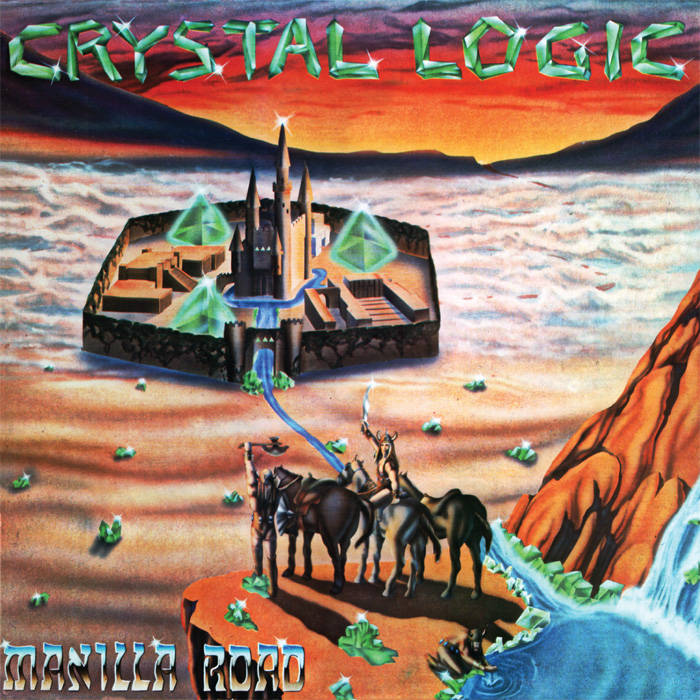
    Crystal Logic is perhaps the most widely respected album produced by the early Manilla Road simply in terms of how many covers exist for the songs, and how many latter day traditional heavy metal clones their formula. And the term formula is only used here in its loosest possible meaning. There really still isn’t a cookie cutter format like some weaker bands, nor is there a tendency to keep the sound uniform in terms of intensity. For this release Shelton and company still didn’t fear changing up the tone or atmosphere of individual songs to help with their overall effect or message. “Necropolis” and “the Ram” have radically different levels of heaviness for example. Also despite this album’s reputation of being fairly upbeat and epic, “Veils of Negative Existence” starts with some downright sinister laughter with a slow, drudging almost Doom Metal sounding number about the metaphysics of inner sorrows.

    We need to discuss more about this Doom Metal connection while we’re on the topic of “Veils of Negative Existence”. It is no secret that early Doom Metal bands and later ones with a traditional metal bend like the Gates of Slumber have flirted with Manilla Road’s catalogue. But surprisingly, the covers they choose are usually never for the most overt Doom Metal inspired tracks. And I think the fact that such a small band can gain the respect of musicians firmly rooted in other genres is testament to the creativity and the musical chops of Manilla Road in this era.

    And while the music itself does sound fairly happy compared to the darker Metal of this time (this was around the start of the First Wave of Black Metal after all), the lyrics themselves – when not too overtly intellectual and cerebral – have a tendency to cover dark, cynical, and at times macabre imagery. But that is the main weakness of this album – though it largely depends on how obvious a listener wants their lyrics. Take the title track “Crystal Logic”: it is so symbolic that there is room for interpretation (or maybe its just a case of symbolic word salad gone to its extreme). However, it is fairly clear that the lyrics are a statement to distance the band from religion of all forms and a pledge of allegiance to “logic” (remember how we mentioned this was about when the First Wave of Black Metal would descend upon the musical landscape?). The lyrics are sometimes a little overly symbolic yes, but again as mentioned in one of my other reviews – you usually shouldn’t come to Metal songs expecting the lyrical equivalent of Shakespeare. Fundamentally however, the lyrics are the most clear room for growth on this album.

    Aside from the lyrical navel-gazing, this is undeniably the point where Manilla Road found their musical footing. And on this ground they planted their leaden sabatons and stood their ground unyielding – at least for a few years. When people picture the classic Manilla Road sound – this is what they imagine. There will be more albums using this sound before Manilla Road takes their forays into Thrash, but this album is the essence of their early charm, mixed with the polish of their later sensibilities. And it deserves its respect as a classic album unsullied by the mainstream.

  • The Mummy

    Original Year of Release: 1959

    Genre: Horror

    Rating: 3.5/5

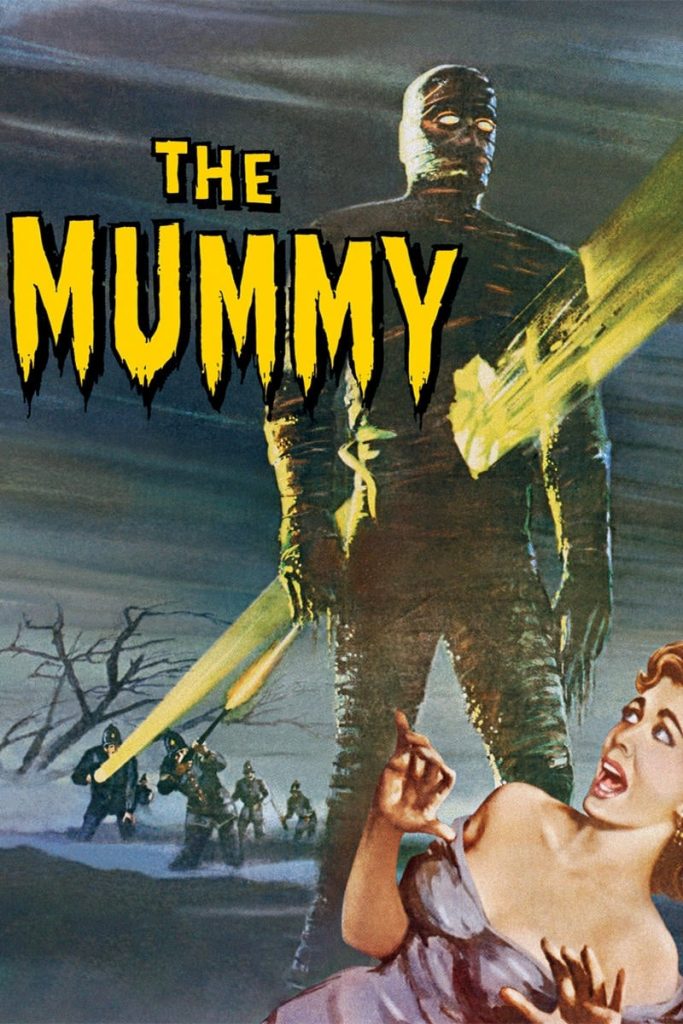
    The Mummy has gotten more remakes than it can possibly deserve to get. It has gotten to the point where the original Universal Horror mummy series’ plot is the equivalent of the zombie virus genre: the transmission of a contagious code into the DNA of other plots. Ironically enough, the most originality with a horror plot with a mummy came from a Tintin comic. And that’s only because they dared to go Aztec instead of Egyptian with their concept. At least I think there was a mummy storyline – nowadays I can barely remember the syllables to a spell after casting it (but don’t tell my acolytes that). Adding even further to the irony, amidst the mindless and soulless remakes we are getting now, we are getting a movie entitled the mummy and it is by one James Wan. Make no mistake, James Wan does had some movies that were less impressive than people give them credit for, Orcus the Vile is not so easily impressed as all that – but for the most part he is as good of a creative as people make him out to be. So it does make selecting the next congregational loyalty field trip much easier to decide on. While the hype is building, the inner circle of the Cabal – I mean my poker buddies and I – decided to do a private screening of the Mummy by Hammer Horror.

    This movie really does show the ideas from all the lesser Universal sequels spliced into one movie – luckily this one movie is more competent than the movies it took inspiration from. You have Sir John who here is a much better character, you have the debonair servant of Karnac, here much less charismatic but also much less of an incel, and Kharis’s physical acting is a little bit more on point – maybe because of the eyes. Acting overall with all the other roles is about as decent as you would expect – we could have done better with Isobel as she lacks any motivation or goals of her own.

    The effects are quite decent – fitting for hammer horror (when they have the budget mind you, some of their cheaper efforts come across as cheap), the one exception is Kharis’s casket which is obviously made of cardboard or plywood and painted over. And it would not be an issue if it was not featured in well over half of Kharis’s scenes. As a result immersion wise this has more of a fancy theater feel than a realistic movie feel.

    We also need to address the creativity here – yes they took some plot elements from the Universal Movies – most of them in fact. However, some details, like the intricate procession of Princess Ananka, was something that makes this movie uniquely detailed. Also special commendation for never establishing a weakness for Kharis – we don’t mention the herbs, we don’t mention fire – all we know of him is that he is driven by god-given single minded purpose. This would be a writing oversight in some movies, but here it ads to the tension in the final scenes where the entire police force open fires on Kharis, and we as the audience along with the characters, hope and pray its enough to kill this unstoppable entity sent from pagan lands.

    Some reactions of the characters were too pulpy to be natural, but some were at the emotional climax of the film and others were forced by virtue of other actions being due to plot elements from the Universal Series being followed. Fundamentally, aside from some glaring set problems and some lack of character depth, this movie is a perfectly serviceable remake of the Universal Horror series. And while it doesn’t add enough of its own to fully make it a classic in its own right, it is punching well above its weight class as far as remakes are concerned.

  • Retrospective: Metal

    By: Manilla Road

    Original Date: August 16, 1982

    Format used: CD

    Rating: 3.5/10

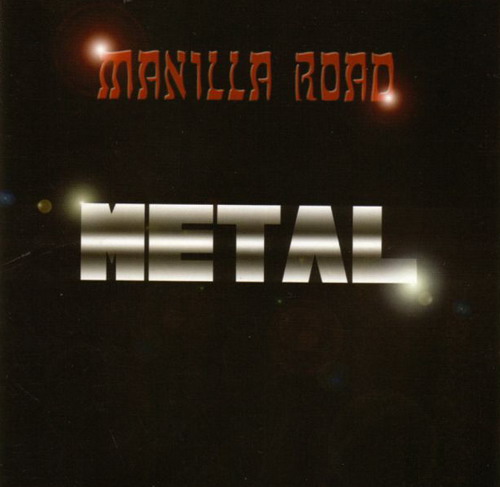
    Compared to the clearly more experimental Invasion, Manilla Road’s sophmore release Metal features a few standout tracks that contain the seed of greatness that we see fully realized on their next album. But we will get to that in due time. Overall, Metal is much more grounded in hard rock orthodoxy than the last release, and as a result, plays it safe musically. That is the bane of this album. There are some fantastic tracks that passionately capture the spirit of the age and tap into the most creative veins of Metal songwriting creativity. The title track, and the ethereal and genuinely imposing “Cage of Mirrors” come to mind. From these two tracks we see most of the innovation this album has to offer. Aside from that, we have fairly standard, if unusually heavy hitting hard rock riffing with some metallic ferocity sometimes coming in. The drumming here is also what NeoSpeed tryhards wish they could capture. If you listen to the songs you’ll know exactly what I mean. And I think it has to do with Manilla Road getting a new drummer at the time of this album’s release. We also see proof that Shelton and company are refining their craft because there is another version of “the Far Side of the Sun” on this release that actually feels more polished and properly edited. This album is still in that period of growing the beard musically. There’s an awkward growth, its long and scraggly and while there’s substance it has yet to become a well oiled and groomed mark of pride. Make no mistake, Manilla Road can be proud to release this album, but it is still a work of exploration in a way. And because there’s still a little bit of refinement to be done we see a lot of copybook riffs throughout the song which makes it fall just short of the caliber of Invasion.

    In terms of Manilla Road’s discography, weirdly enough, I will recommend Metal over Invasion, even if I do think Invasion is a better work overall. The reasons for this fairly nuanced, but I believe that since there is already a rerecorded version of one of the more ambitious songs off their last release, and since we get more into the heavy hitting sound that Manilla Road will deliver in the future, this album won’t be as jarring to fans listening to them. If listeners start with this album and skip invasion, you do still get a full picture of musical evolution since that early installment awkwardness is there, but it is a better taste for what the band arguably should sound like and doesn’t have the experimental deflection for more picky listeners. Like Invasion before it, Metal shows Manilla Road’s early hard rock sensibilities and inklings of that more clearly definied heavy metal sound they will become known for later. It is slightly more generic feeling, but its moments of excellence make the filler worth it. And though it has filler – I prefer Jambalaya over some generic fluff that could have been stuffed in the Turkey just for the sake of it. And the “filler” on Metal is the same tasty regional treat as a family recipe for Jambalaya.

  • Crimson Desert

    By: Pearl Abyss

    Genre: Action RPG

    Release Date: March 19, 2026

    Platform Used: Windows/Steam Deck

    Rating 4/5

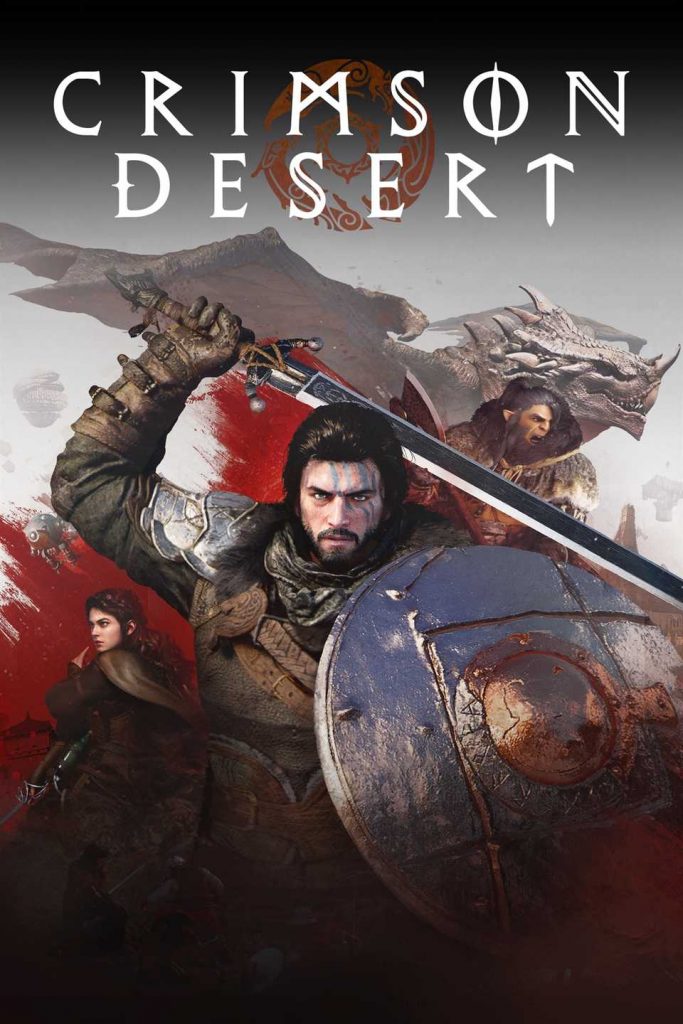
    This game was a disappointment. Not because it was bad, or somehow lacking – but because I had the hammer of Orcus ready to bring dawn upon this game for all its claims leading up to release. M1 compatibility? Ambigious. Steam says no, the game initially said it would be compatible, and the game was unplayable on M1 mac despite the app store claiming it is supported. Switch 2 compatibility? Was teased, announced, and then quietly swept under the rug without consequence. And hey – game respect game. I once ended an entire plane of the multiverse out of petty spite for a lost game of oathbreaker (and in case readers are wondering – Orcus the Vile’s signature spell is murder). Returning to the actual game though, I cannot remain angry at them because once I installed the game on a suitable device, it worked like a dream.

    The gameplay is fun, robust, and easy to pick up. Unlike a lot of ARPGs this game does not punish you for not dodging or not parrying, and you are not dependent on and increasingly spiking learning curve to survive. Perhaps this was a conscious decision to offset the lack of difficulty levels. Who knows? One thing the gameplay lacks that is now offered by many next generation triple A roleplaying games, is that freedom and emergent gameplay that is increasingly trickling down from the realm of immersive sims. Its not hugely important, but it would be fun to have the option to throw the badger you just killed off a cliff. It would also be nice to do something like take the pebble you just picked up and throw it at an NPC. That’s the other thing – NPCs really can’t be killed or threatened unless you have the specific item that lets you do something other than greet them (more on that later). It would probably be a nightmare to code, but once more, the expectation for games of this caliber is usually a degree of interaction with the environment beyond greeting.

    Masks or face coverings make a bunch of fun options open up, like stealing or threatening NPCs. It really allows for more varied gameplay, and I like the touch of you having to don a mask to actually conduct crimes. What I don’t like however, is how we have the option to steal earlier without it ever being explained why you cannot steal a box when the option is right there visible on my screen. Orcus the Vile is a notorious looter, eighty percent of the Templars’ treasure came through my direct despoiling – when I am offered the option to steal, I do not expect to be turned down. Though I do suppose there is a certain demographic that has grown tired of increasingly obvious tutorials and this game is meant to appease them in that way. There is definitely a lot of exploration in this game and its refreshing learning about the world one animal at a time and needing to experiment a little to find out how stuff works.

    The story and worldbuilding definitely go above and beyond what you normally get with big games nowadays. I appreciate that there is an ongoing mystery and you continuously learn about the world and its hidden secrets as you go. And having the tease of something just beyond what you have already seen is something I haven’t seen much outside flat-out mystery games. There is a sense of wonder and amazement in this game and I feel like it was captured perfectly not just in-game but also through the loading screens and the subtle orchestral music. It can be said however, that the designers had the advantage of working with a preexisting world when they came up with the game. My understanding is this game is set as a prequel for Black Desert, an MMO also by pearl abyss (if there were trolls in that too I would jump at it).

    The graphics is a huge selling point, and I don’t know when the graphics became such an important category to choosing the games we do but make no mistake – if your graphics card supports this game it does look beautiful – but I’d say its worth it even without the graphics. Heed me carefully, as Orcus the Vile is not a soft man, and will not speak thusly again soon: it doesn’t matter if this game looks pretty or not – Orcus enjoyed it on the unimpressive looking graphics the steam deck presented, and he enjoyed it on the only slightly more impressive computer screen (which reminds me I need to send forth a winged abomination to acquire me a new graphics card sometime). If you’re here for the graphics its here, but you’ll enjoy it without it.

    Crimson Desert was marketed as an open world game. And it certainly does deliver on that selling point. There’s lots of exploration and you definitely don’t feel railroaded while playing. The fact that you can collect creatures and learn more about them as you go, and the journal entries with lore about almost everything in game helps incentivize the exploration that is so integral to the open world element.

    Orcus the Vile has now stowed away the hammer of dawn – Crimson Desert is a game to be spared from petty vendettas and wrath. It was fun getting into the game, and I will continue to enjoy what it has to offer. For the sake of avoiding spoilers we have only scratched the surface, but once I complete this game there will probably be a retrospective coming on it. I recommend this game to anybody who have considered checking it out. It will sink a lot of your time in the way only a really good and immersive game can.

  • Retrospective: Invasion

    By: Manilla Road

    Original Date: March 20th, 1980

    Format used: CD

    Rating: 4/5

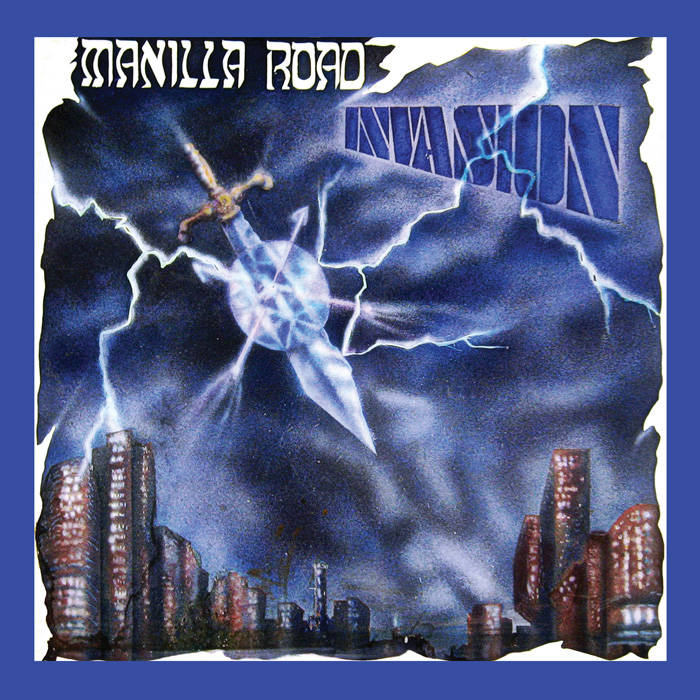
    Manilla Road’s debut suffers from a feeling of freshman awkwardness. The beard is patchy, the lunch is spilled in the cafeteria, the whole shebang. But nobody can deny the swaggering and confident lad is phony. And he has passion and a realness that is endearing.

    That is the essence of Invasion. The biggest problem, if it can be called that, is Manilla Road are still refining their craft. This album is jam heavy – with lots of guitar tricks – if you didn’t tell me no keyboards were used except on the intro of “street jammer”, I would assume that a lot of the ambient wailing was done through synths. And while there’s good control of the nascent guitar sounds, we do see Manilla Road somewhat struggling to find their sound. There’s a lot of space rock, lots of what would otherwise be be called doom fuzz, and a healthy dose of hard rock. This album can be called straight up rock as much as it can be called Metal at this point in Manilla Road’s career. And that is part of the charm, the ambition and the journey to accomplish it.

    This album will not be for everyone, it is too foot deep in 70s convention, and basement-jam experimentation, the lyrics are a little hit or miss too – but if you can forgive that – Invasion is a solid listen that gives us insights into what is to come from Manilla Road. I would recommend this album moreso for the fans who want to hear the full sonic history of Manilla Road as well as for fans of straight up old timey rock.

  • Updates Month of April

    Hear ye those who know to listen, going forward there may be some small updates to font and the format of reviews. Possible also the landing page – do not be alarmed.

    We will also be looking at the first deep delve into a specific artist’s discography in between releases. Expect a lot of retrospective reviews. Because of the Manilla Road tribute tour that recently came to completion, and because of the enduring influence of Manilla Road in the underground, we will be reviewing the early material that aren’t available on Spotify. This way the purely digital ground can get some more insight on what’s out there.

    It may be a slow process, but feedback is appreciated on the updates in fonts and other features we may experiment with.

  • The Cabinet of Dr. Caligari

    Original Year of Release: 1920

    Genre: Horror/German Expressionism

    Rating: 4/5

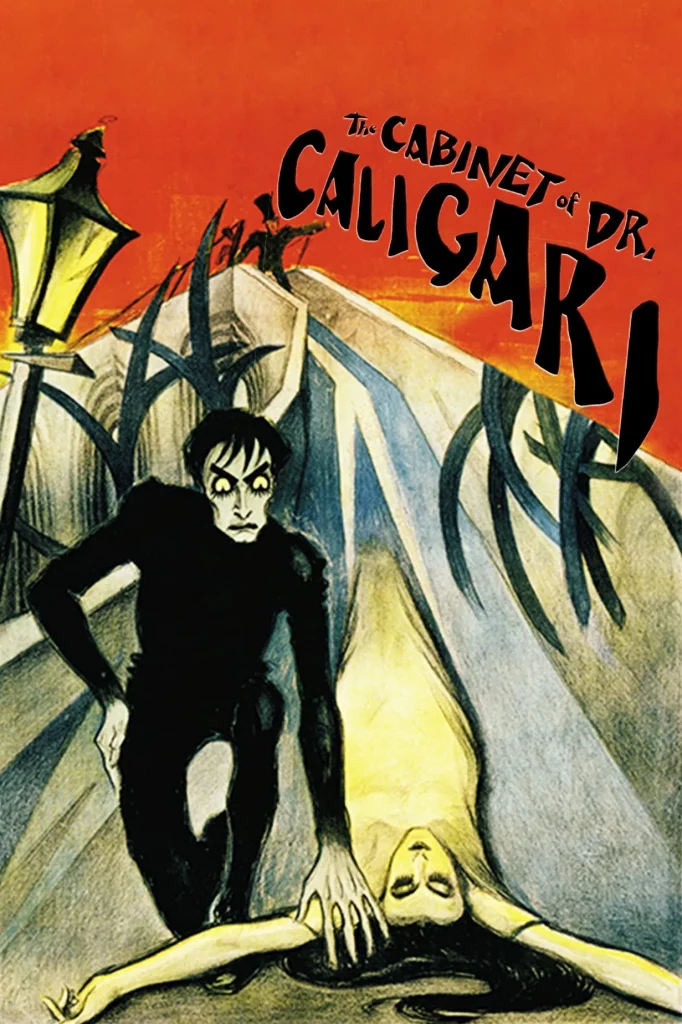
    The Cabinet of Dr. Caligari is a film whose impact is felt more than it is known. Tim Burton loves himself these jagged angles and his fairground imagery. Cesare is the vogue look for the artsier goth kids, as well as for one of my best assassins – Brother Strangler. Now that I think about it, Brother Strangler does like his clove cigarettes and is impartial to the Cure too.

    Incidental music for this specific streaming edition of the movie was odd, seemed suspiciously electronic, almost like they were playing to the audience by including a darkwave sounding ambient track and looping it. But without going down a rabbit hole, we can assume that maybe the incidental music of the original is lost media and throw them a bone. Because Orcus is not interested in the musical equivalent of some namby pamby goblin tiptoeing through the night before the movie shows a scrawny European straight out of his campus studio pull a sadistic expression as he strangles a kewpie doll looking girl in white in a portrait of sublime human tragedy – he is there to see the portrait in all its morbid decadence. And this movie does have stunning visuals. While the sets look cheap by today’s standards, the unearthly angles and matte paintings they have in the background is true art. And as far as art cinema goes, the story is good, and even just reading the words and following it visually, you jump and chuckle in glee at the sordid violence, and the twists and turns go like a knife in the gut. And do you know how thick Orcus the Vile’s stomach is? There are those who called him Orcus Ironguts for surviving no less than three poisoning attempts in one month while reigning as Warlord in the hinterlands of Bulgar.

    It goes to show you what timeless storytelling can do. Even the characters have distinct motivations, and the film plays well off the manias of Franzis as he tries to expose Caligari, as well as the Doctor himself. One qualm Orcus has with characters are we don’t know as much about the motivations of Dr. Caligari. I understand the desire to keep him a mystery and let his mystique make him more memorable and deadly, but we need to know more about his motivations. To be fair, it doesn’t make the movie lesser, but it would do additional good to the film.

    And that is the Cabinet of Dr. Caligari. If modern assembly line cinema is slop to the through this is the sinful fondue of forbidden tastes and experimental cuisine. It is the antithesis of what film became later, and like its peer Nosferatu, has had a monumental cultural legacy that endures to this day.

    Orcus hears there is a remake. Perhaps it is time to muster my Legions and set them on the warpath again so we may see if there is finally a remake that allows us to claim that we “revisited an old classic” without lying through our teeth.

  • Enslaved & Storm Weather Shanty Choir

    H3U33JEPH2S7AEN34FH5BXNDFA

    By: Enslaved and Storm Weather Shanty Choir

    Date: March 27, 2026

    Format used: Digital

    Rating 4/5

    Enslaved has ceased to be the black metal beast it once was for a very long time. With an increasing amount of folk influence in their once more progressive music, it comes as no surprise that Enslaved would embrace one of the most authentic Norwegian folk adjacent outfits out there.

    Storm Weather Shanty Choir strikes me as among the initiated, after all, they have the sense to describe themselves in their spotify bio as “rockers” singing Shanties as opposed to aligning themselves outright with Metal. Their dark, slightly somber shanties are spiritually aligned with the music of Enslaved.

    What we have is a creative and innovative collab, with the first track receiving the stamp of Enslaved and being transformed from both its original format and from the typical music as Enslaved while not going too far off the mark. In short, the essence of “natural progression”. The second track is more clearly the work of the Storm Weather Shanty Choir but there are some musical nodes that bleed Enslaved. Both of the tracks are so unique I guarantee you if you compared them to every other cover of Fire Morengo and Anna Lovinda, you would be able to pick these out in a crowd. And that is what makes a good cover, this imprinting with your own musical stamp.

    If Enslaved continues dropping a single every year or so, and deliver this caliber of song consistently, I for one am okay with that sort of output. Because this content is familiar enough not to be jarring, and new enough to not to be alienating. And the two artists coming together is the collaboration nobody knew they wanted, and I’m sure now that the waters have been braved – we will, in fact, be wanting more.

    I would recommend this song to fans of any sort of folk music, as well as fans of Enslaved and Storm Weather Shanty choir. This isn’t a release that has a niche in the existing audience.