Category: Music

  • The Outsider

    By: Old Sorcery

    Date: January 26, 2026

    Format used: digital

    Rating: 3/5

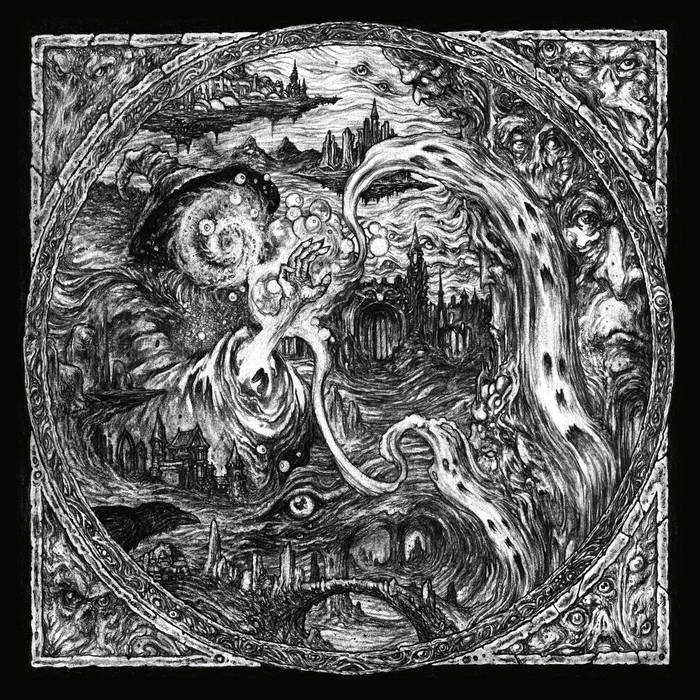
    Not until after I wrote up this review did I come to understand that Old Sorcery’s The Outsider is part of a trilogy that started with the Escapist. Normally, for better critical cohesion I would revisit a trilogy in anticipation of a release if possible, but this time I was blindsided and for that reason a dozen acolytes will be strung up on saint andrew’s crosses in my basement. Rest assured, Orcus the Vile will not make such a mistake again. But now on to the review. The Outsider is distinctly darker than its predecessor, both in terms of art and in terms of subject-matter. Unfortunately, the music itself does not have this same dark edge to it. Rather, the music is simply more sorrowful and atmospheric with the occasional glimpses of insanity through wailing ambient passages and moments of tension that are resolved in the most eerie way possible. The majority of the darkness on this album comes from this dissonance technique and from the themes itself. But you cannot carry musical darkness through imagery alone. It is the exact reason why Death SS is considered child’s play by today’s standards. The album does carry the hallmark of all good dungeon synth – it feels like a desolate melancholic eulogy performed in a dismal dungeon. But fundamentally, the use of guitars that are surprisingly acoustic this time around – as well as the tendency for more mellow sounds – makes the music a little less potent than you would expect.

    One thing I should bring up is the individual tracks themselves are usually good enough as shorter numbers, but the 20 minute “Magickal triumph” is to blame for a lot of the album feeling mundane. It drags on for longer than it should have and delivers less inspired music than if we were to combine the other tracks into one song. I understand we say that one track should just be one song – but for the love of the Great Duke Abrasax – don’t be afraid to vary it up. Orcus the Vile would need to cast a spell of temporal warp and only then will the song go at the same level of quality as the others. We could perhaps shorten “Magickal Triumph” or make this work an EP instead of a full length album if need be. However, if you can focus on just this music or use it as study music you absolutely will not be distracted I guarantee you that. Although in the former case, you will need to enter a trance to sustain your focus.

  • Review: Into Oblivion

    By: Venom

    Date: May 1, 2026

    Format used: Digital

    Rating: 3/5

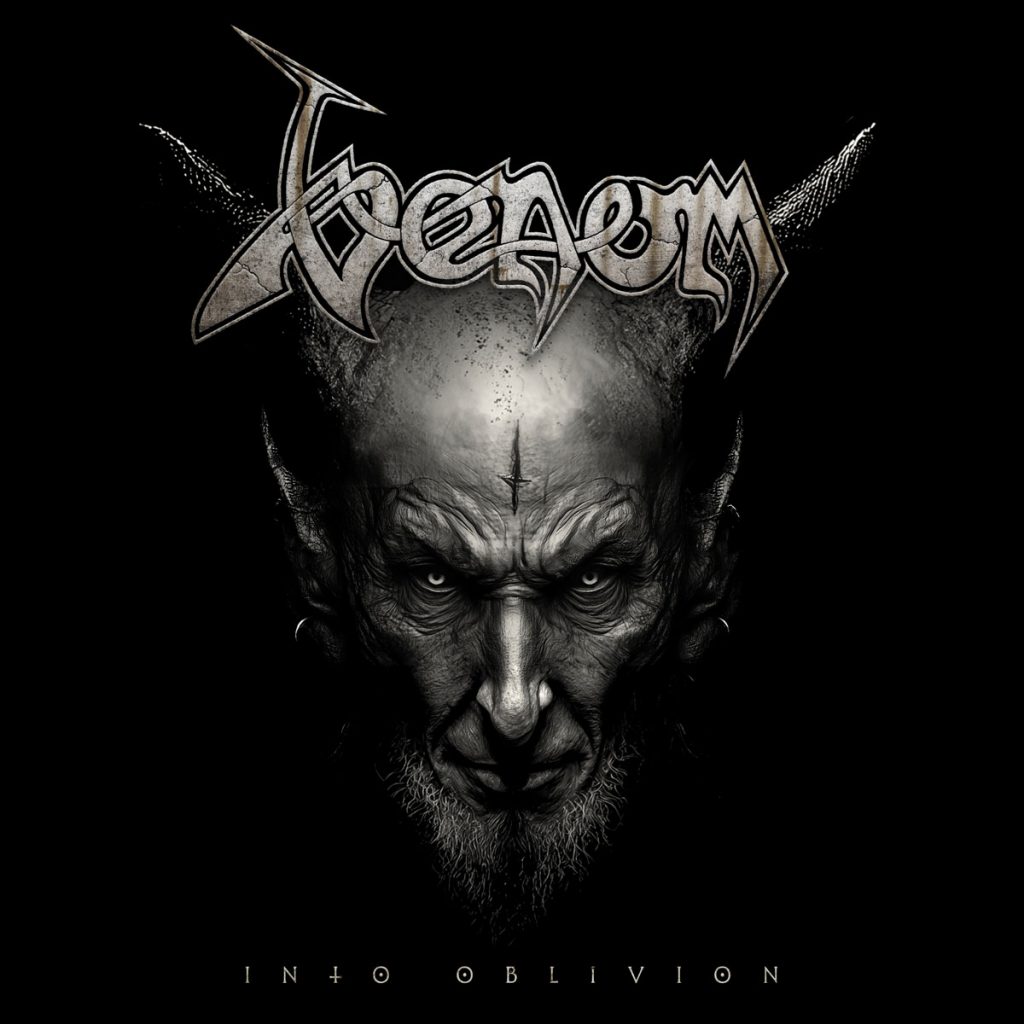
    As can be expected for a long delayed comeback by a classic band, Venom’s return Into Oblivion is marked by their trademark sound, more nostalgia than is good, and surprisingly, more fresh and creative ideas than you would expect for the men who wrote the textbook for the first wave black metal movement. But that was then, this is now, the old is new, and the dead are stirring in their graves. Seriously, I nearly cancelled my Order’s Beltane sacrifice just to listen to this album. Luckily. after the second century of death you tend to realize your impulses are just as futile as everything else.

    Futility does not, however, describe this album. Futility would be creative stagnation. And we do have some new lyrical territory equally evil and sometimes even as dark as their usual forays into devil worship. With songs of dragons, myths, and folklore, there is yet some poetic codices to be unearthed at the temple of Venom. And I will say, as somebody who have heard every single minstrel tread this territory back in the olden days – and having impaled the worst of them as public spectacle – Venom will be honored guests at Orcus the Vile’s feasts for years to come. But do not expect any Power Metal leaning bardic shams from Venom, there is nothing but raw aggressive Metal here – and curiously, without the punk sensibilities this time. Now make no mistake – Venom was always a Metal band first – but in my undead opinion, their early music would be inseparable from punk both in ethos and in terms of musical approach. And while in the past they have been criticized for simplicity, it must be said all the robes and incense in my compound makes a fiend yearn for just that simplicity. What we have found instead is, merely well tested and battle hardened classic Metal riffs. Unfortunately, due to the simplicity and raw attack of the music, Venom have failed to make the riffs take on a life of their own. I don’t mind those riffs, and at a certain point all Metal riffs have their backbones in something that came before, but we need to consider how we lend voice to these foundational Metal licks. It has a classic sound, but Venom needs to either add a little complexity and layering just to give it their own voice, or bring in some of that hardcore punk sound and lean more fully in the direction of something resembling the Thrash Metal they helped influence (without losing their own identity of course).

    It was a dangerous tightrope and Venom navigated it well enough considering how easy it could have been to just recycle old music and lyrical tropes specific to their brand (you’re a band of musicians not a company right oh champions of the old guard?). Well – strictly speaking, they do recycle their most impactful song culturally, “Black Metal”, with the very derivative “Lay Down Your Soul” which is a nice song to be true, but if it were not for greater tracks, it would not exist on its own virtue. Luckily, that is about the extent of the pandering, the problem is just how Venom struggle to find a voice, and how they lean too heavily on pre-existing Metal riffs without innovation. Lyrically, in terms of ideas, and in terms of translating their no-frills aggression into a modern album – this is quite the well executed release. There are just a few hiccups technically speaking that hold this album back from being the enduring classic the rest of their catalogue was upon release.

    Who are we kidding though? Venom is grunt music. Can you expect the salt of the Earth hellraisers who wrote songs entitled “Aaaaaarrghh” or “Women, Leather and Hell” to care about criticism any more than notoriously critic-proof footballers and part-time musicians Iron Maiden? I think not. But I have said my piece and I will now offer a benediction unto Venom. Carry on Venom. Keep showing that you only need a few good ideas, passion, instruments, and some friends to make something the legions of hell can march to war to.

    This is a good return for Venom, but I hope not the end of the line for them. Even if there may have been murmurings of the sort. Murmur is a lesser demon anyway, abjure him with all the names of the godhead says I! If you enjoyed this review be sure to return in two days for my next review.

  • A Cry for the Slain

    By: Cnoc an Tursa

    Release Date: April 24th, 2026

    Format Used: Digital

    Rating: 3.5/5

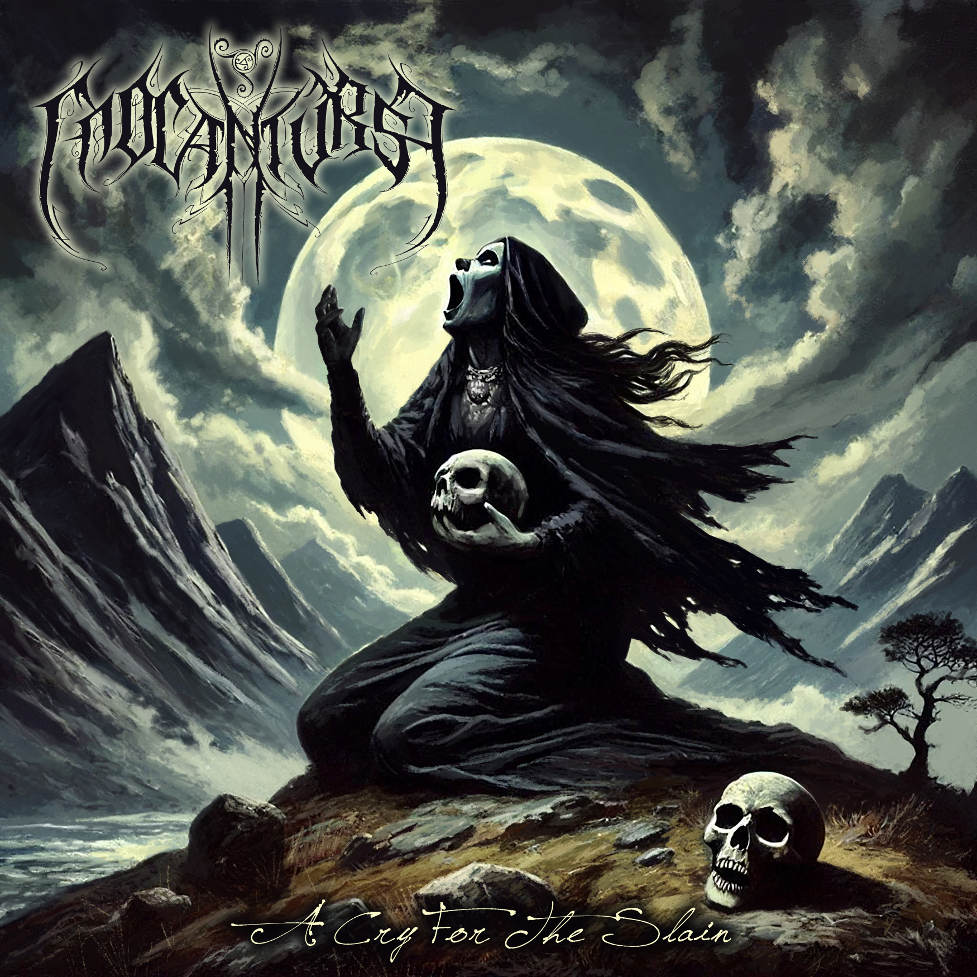
    Ah yes, the Scots, an unruly bunch bunch of Mountain Celts who felt that a single hillfort would not suffice to protect them from the invaders besieging them since the Romans was thoroughly cowed by the ginger maniacs and built a wall to keep them in. How unfortunate that the English were not so easily beaten back. Yes the plight of the Scots is indeed sad, and it is therefore appropriate that Cnoc an Tursa’s latest release has a sorrowful, melancholic sound that permeates every song. We also see the clean female vocals – because apparently we need that beauty and the beast vocal gimmick here – in addition to the slight metalcore leaning rasps that has marked Cnoc an Tursa’s debut album as well.

    Every song on this release is long. I have personally find it dragging in places and I am a certified alumi of mage college! The songs have enough variety and creativity but the sections of the song tend to plod a little bit as we sit on the opposite end of our seats awaiting the next lead or vocal section. The atmosphere is more than decent, and it reminds me a lot of Saor, another band with “scottish sensibilities” – so to speak.

    One strong element of the album is that we do have keyboards and other musical ornamentation clearly audible in the mix. And this is no small feat mind you, as some Folk Metal bands – who do this as their forte – do not always have all the little embellishments pop up. I do find the clean vocals thrown in to add to the overall experience, even if I feel like the contrast isn’t as stark as you would have with say even more guttural death metal vocals.

    Their lyrics have less swaggering nationalistic pride this time around, and there are some interesting forays into mythology and folklore. I’m not sure how to feel about “Am Fear Llath Mór” – have the Scots finally discovered I open portals into the mists of their highlands to abduct the frail and the weak? I would need my acolytes to look into this, but at least from the song it appears that they have not yet guessed at my nefarious purposes yet. Regardless, the eerie subject-matter and more lamenting tone of the obligatory pride songs make this album feel much fresher than it would otherwise.

    Between this album and their debut, I feel Giants of Auld is still stronger. I will be looking at their sophomore effort next just because this album is good enough to make you want to see if the last part of the trinity also holds up. If you like atmospheric Black Metal, give this release a listen.

  • Retrospective: The Deluge

    By: Manilla Road

    Date: February 25, 1986

    Format used: Digital

    Rating: 3.5/5

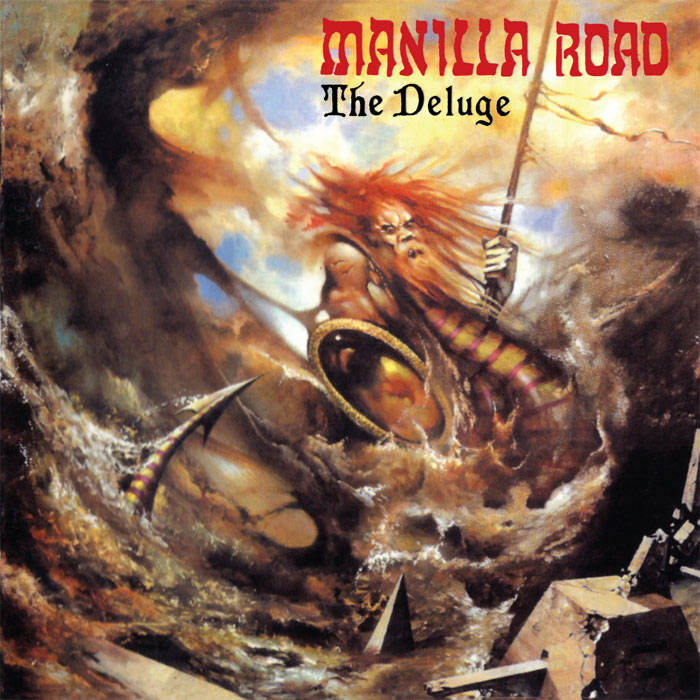
    Whether or not Manilla Road still was at their creative peak in the 80s is of little importance. The Deluge does not suffer from any one particular shortcoming, rather it is a weakening of all the strengths that make Manilla Road’s music great.

    Case in point, the lyrics are less florid, less epic, and while there is a case to be made for why this stripped down approach to songwriting was taken, I can guarantee you, if this was their format from them start of their career – the most well-known and well respected music Manilla Road has ever produced would only have a fraction of the majesty and excellence that made their budding underground releases so impactful.

    The songwriting itself is not bad, but they lift just as much from the canons of mid-era Bathory with a hint of Cirith Ungol as they contain their own touch. And there is still a distinct lean towards the grittier thrash sound that started on Open the Gates. The thrash metal influences are a lot clearer on this release, and they are appropriately accompanied by a down-toned and somber vocal delivery by Mark Shelton. Subject-matter is also a lot darker, and we see a more ballsy stance being taken against religion, with the poets lambasting specific historic ills in their verse. Its no longer just “religion is illogical” or “Religion is slavery” it’s “the church burned heretics” and “this holy war is considered a national disgrace to this day”. It is always nicer when bands take a specific stance when they begin making music with more venom.

    Although there is a cost to this change in their music. There is a more lemming-like tendency for songs on this album to entrench themselves firmly in 80s underground metal orthodoxy. And in truth, Manilla Road’s strength has always been that they can deliver the goods without being constrained by the comfort zone of other metal bands.

    That being said, Manilla Road are far from creatively spent. They still have some excellent riffs, and their are even some moments of excellent atmospheric keyboard interludes – which more than justifies the instrument the band has historically distanced themselves from.

    Overall, the Deluge is an album of experimentation for Manilla Road, much like Invasion was. And as we go forth into the middle of a new decade for the Kansas outfit,we will hopefully see a whole new sound for Manilla Road emerge. But only time will tell if it holds a candle to what came before.

    I would recommend this album for any fan f 80s Metal really, since it plays it so safe, but there are some qualities that could be used to get the Thrash audience appreciating the more traditional sensitivities of Manilla Road.

  • Echoes of a Time Long Past

    By: Wolfchant

    Release Date: February 13, 2026

    Format used: Digital

    Rating: 3.5/5

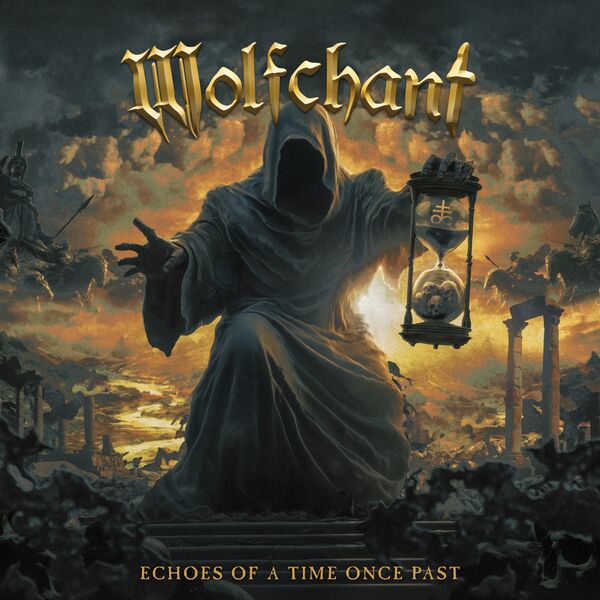
    There are many words you could use to describe Wolfchant’s latest album. Epic, melodic and catchy are three. Shiny, overproduced, and bombastic are three others. Nay, Orcus the Vile has never particularly gravitated towards Wolfchant. To be sure, they’ve written some amazing albums. Bloody Tales of Disgraced Lands stirred Orcus to furore. And I have rallied my hordes to songs off A Pagan Storm. It’s simply that the early material – while good – did not have the staying power of other bands. And their newer releases are real crowd pleasers in the same way that Powerwolf’s releases are.

    Especially on this album we have some real catchy poetry. “Dem Sturme Vorause” is just real treat isn’t it? Just makes you want to belt that Germanic opera right at the top of your lungs until your gut collapses inwards and gives you a forced gastric bypass (what do you mean that doesn’t happen? I’ve gotten a hernia that way in 1906!).

    Honestly, the second half of the album really makes the rest of it worth the effort in terms of raw aggression and evil undertones. I just don’t know why we preface it with all these shiny symphonies and electronic tomfoolery. I hope Wolfchant doesn’t think their audience would lack the attention span to stay throughout the entire album. Because that would be too cynical – and I am saying that as a notorious eater of cynics (and they did taste like dogs in the olden days).

    Yet while the second half of the album is still more presentable and sounds less like a weird Power Metal-Melodeath fusion, Wolfchant still doesn’t offer us anything less shiny – and their addiction to symphony orchestras makes us wonder why they didn’t just get a full-time quartet to beef up their admittedly impressive keyboard plinking.

    That’s Echoes of a Time Long Past. In terms of symphonic metal and melodeath you can do worse, but you can also do much better. And while I will definitely revisit some tracks in the future, this album will most likely fail to make a long-term impression. Either that or it will become a slow-burn guilty pleasure that takes time to sink in. Only time will tell if this album becomes a mere echo of a time long past.

  • Retrospective: Open the Gates

    By: Manilla Road

    Original Date: December 1984

    Rating: 4.5/5

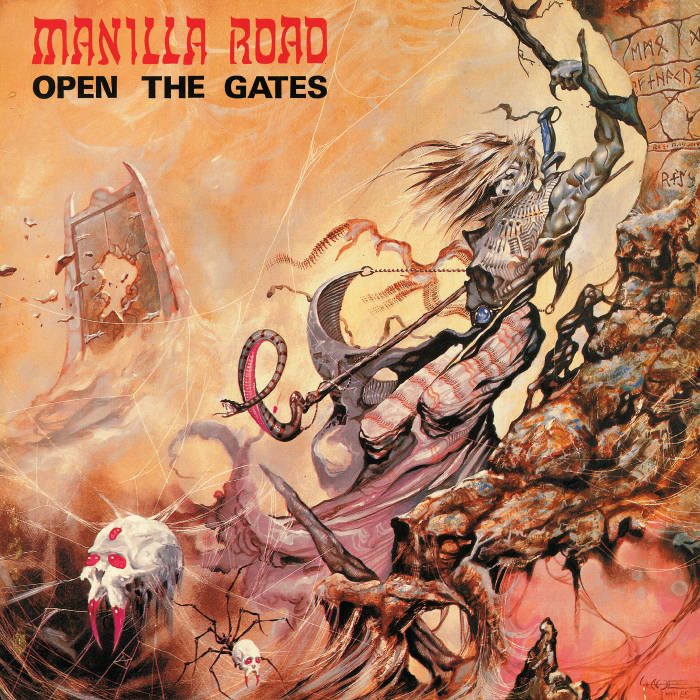
    Compared to the albums that preceeded it, Open the Gates takes a slightly different direction. Far from being the upbeat, somewhat noodle happy guitar riff-fest we had before, this album is a grittier and harsher with distinct thrash influences that occasionally crop up.

    Once more Manilla Road scoffs at formula and repetition, while the riffs aren’t the most varied and progressive if you played me three seconds from any song on this album, I would instantly be able to name the song its from. Each song has its own tone and feel, and with tracks like “Witch’s Brew” and “the Ninth Wave”, Manilla Road make it clear that they can still produce brooding and somewhat sinister tracks for the sake of narrative purpose.

    “What of the lyrics?” I hear readers ask. “Does Manilla road still engage in their usual pulpy cheese when they compose their lyrics?” Well if you are inclined to only take a band seriously who write serious lyrics, then yes, you will not be disappointed with Manilla Road’s Open the Gates. The lyrics are a bubbling druidic cauldron of inspiration with reagents taken from Viking myth alongside Arthurian lore and even astrology. There is even a few references to Roman mythology. If we look at the kind of influences Manilla Road was associated with later in their career, this album is the point where that world-building begins.

    As on all their past albums, Shelton delivers the vocals with conviction and confidence, and even if his voice isn’t the most pleasant on the ears, its honesty and flair is unmistakable. The production here isn’t as raw as the other extreme albums that came out around this era, and that just shows how much care Shelton and co took to deliver the best product possible. With it being an underground release from a small record label, it would be too easy to go for that cold raw feel of the First Wave of Black Metal, but instead all the instruments can be heard and the atmosphere hits home when it needs to.

    We also need to address the beginning of the change in the band’s musical direction. I don’t think it is a conscious change in sound to make the music more accessible. There is still too much of their trademark sound for that to be the case. I think Manilla Road has always been entrenched in the sound and mindset of “true metal”, and between the dominant forms of extreme metal developing at the time of this album’s release – the most clearly defined and firmly entrenched in Metal was Thrash Metal. Stuff like Death Metal was still largely experimental, and Manilla Road would never stoop to Hair Rock.

    Open the Gates is a great album, not as memorable or as iconic as Crystal Logic but it too punches way above its weight class in pound for pound intensity. I would recommend a listen to anybody as this is also part of Manilla Road’s peak as a band. If you enjoy good high voltage Metal, this is the Manilla Road release for you. No progressive frills, all gritty underground Metal.

  • Retrospective: Crystal Logic

    By: Manilla Road

    Original Date: December 1983

    Format used: Digital

    Rating: 4.5/5

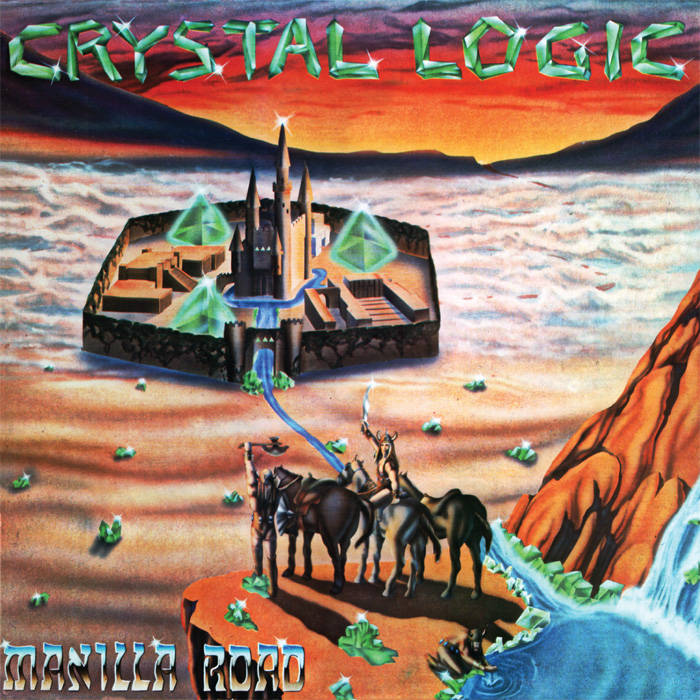
    Crystal Logic is perhaps the most widely respected album produced by the early Manilla Road simply in terms of how many covers exist for the songs, and how many latter day traditional heavy metal clones their formula. And the term formula is only used here in its loosest possible meaning. There really still isn’t a cookie cutter format like some weaker bands, nor is there a tendency to keep the sound uniform in terms of intensity. For this release Shelton and company still didn’t fear changing up the tone or atmosphere of individual songs to help with their overall effect or message. “Necropolis” and “the Ram” have radically different levels of heaviness for example. Also despite this album’s reputation of being fairly upbeat and epic, “Veils of Negative Existence” starts with some downright sinister laughter with a slow, drudging almost Doom Metal sounding number about the metaphysics of inner sorrows.

    We need to discuss more about this Doom Metal connection while we’re on the topic of “Veils of Negative Existence”. It is no secret that early Doom Metal bands and later ones with a traditional metal bend like the Gates of Slumber have flirted with Manilla Road’s catalogue. But surprisingly, the covers they choose are usually never for the most overt Doom Metal inspired tracks. And I think the fact that such a small band can gain the respect of musicians firmly rooted in other genres is testament to the creativity and the musical chops of Manilla Road in this era.

    And while the music itself does sound fairly happy compared to the darker Metal of this time (this was around the start of the First Wave of Black Metal after all), the lyrics themselves – when not too overtly intellectual and cerebral – have a tendency to cover dark, cynical, and at times macabre imagery. But that is the main weakness of this album – though it largely depends on how obvious a listener wants their lyrics. Take the title track “Crystal Logic”: it is so symbolic that there is room for interpretation (or maybe its just a case of symbolic word salad gone to its extreme). However, it is fairly clear that the lyrics are a statement to distance the band from religion of all forms and a pledge of allegiance to “logic” (remember how we mentioned this was about when the First Wave of Black Metal would descend upon the musical landscape?). The lyrics are sometimes a little overly symbolic yes, but again as mentioned in one of my other reviews – you usually shouldn’t come to Metal songs expecting the lyrical equivalent of Shakespeare. Fundamentally however, the lyrics are the most clear room for growth on this album.

    Aside from the lyrical navel-gazing, this is undeniably the point where Manilla Road found their musical footing. And on this ground they planted their leaden sabatons and stood their ground unyielding – at least for a few years. When people picture the classic Manilla Road sound – this is what they imagine. There will be more albums using this sound before Manilla Road takes their forays into Thrash, but this album is the essence of their early charm, mixed with the polish of their later sensibilities. And it deserves its respect as a classic album unsullied by the mainstream.

  • Retrospective: Metal

    By: Manilla Road

    Original Date: August 16, 1982

    Format used: CD

    Rating: 3.5/10

    Compared to the clearly more experimental Invasion, Manilla Road’s sophmore release Metal features a few standout tracks that contain the seed of greatness that we see fully realized on their next album. But we will get to that in due time. Overall, Metal is much more grounded in hard rock orthodoxy than the last release, and as a result, plays it safe musically. That is the bane of this album. There are some fantastic tracks that passionately capture the spirit of the age and tap into the most creative veins of Metal songwriting creativity. The title track, and the ethereal and genuinely imposing “Cage of Mirrors” come to mind. From these two tracks we see most of the innovation this album has to offer. Aside from that, we have fairly standard, if unusually heavy hitting hard rock riffing with some metallic ferocity sometimes coming in. The drumming here is also what NeoSpeed tryhards wish they could capture. If you listen to the songs you’ll know exactly what I mean. And I think it has to do with Manilla Road getting a new drummer at the time of this album’s release. We also see proof that Shelton and company are refining their craft because there is another version of “the Far Side of the Sun” on this release that actually feels more polished and properly edited. This album is still in that period of growing the beard musically. There’s an awkward growth, its long and scraggly and while there’s substance it has yet to become a well oiled and groomed mark of pride. Make no mistake, Manilla Road can be proud to release this album, but it is still a work of exploration in a way. And because there’s still a little bit of refinement to be done we see a lot of copybook riffs throughout the song which makes it fall just short of the caliber of Invasion.

    In terms of Manilla Road’s discography, weirdly enough, I will recommend Metal over Invasion, even if I do think Invasion is a better work overall. The reasons for this fairly nuanced, but I believe that since there is already a rerecorded version of one of the more ambitious songs off their last release, and since we get more into the heavy hitting sound that Manilla Road will deliver in the future, this album won’t be as jarring to fans listening to them. If listeners start with this album and skip invasion, you do still get a full picture of musical evolution since that early installment awkwardness is there, but it is a better taste for what the band arguably should sound like and doesn’t have the experimental deflection for more picky listeners. Like Invasion before it, Metal shows Manilla Road’s early hard rock sensibilities and inklings of that more clearly definied heavy metal sound they will become known for later. It is slightly more generic feeling, but its moments of excellence make the filler worth it. And though it has filler – I prefer Jambalaya over some generic fluff that could have been stuffed in the Turkey just for the sake of it. And the “filler” on Metal is the same tasty regional treat as a family recipe for Jambalaya.

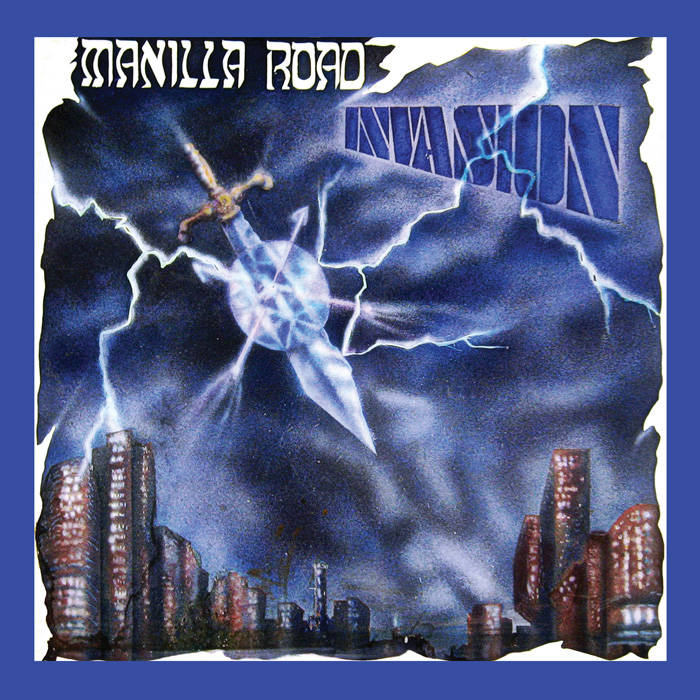
  • Retrospective: Invasion

    By: Manilla Road

    Original Date: March 20th, 1980

    Format used: CD

    Rating: 4/5

    Manilla Road’s debut suffers from a feeling of freshman awkwardness. The beard is patchy, the lunch is spilled in the cafeteria, the whole shebang. But nobody can deny the swaggering and confident lad is phony. And he has passion and a realness that is endearing.

    That is the essence of Invasion. The biggest problem, if it can be called that, is Manilla Road are still refining their craft. This album is jam heavy – with lots of guitar tricks – if you didn’t tell me no keyboards were used except on the intro of “street jammer”, I would assume that a lot of the ambient wailing was done through synths. And while there’s good control of the nascent guitar sounds, we do see Manilla Road somewhat struggling to find their sound. There’s a lot of space rock, lots of what would otherwise be be called doom fuzz, and a healthy dose of hard rock. This album can be called straight up rock as much as it can be called Metal at this point in Manilla Road’s career. And that is part of the charm, the ambition and the journey to accomplish it.

    This album will not be for everyone, it is too foot deep in 70s convention, and basement-jam experimentation, the lyrics are a little hit or miss too – but if you can forgive that – Invasion is a solid listen that gives us insights into what is to come from Manilla Road. I would recommend this album moreso for the fans who want to hear the full sonic history of Manilla Road as well as for fans of straight up old timey rock.

  • Enslaved & Storm Weather Shanty Choir

    H3U33JEPH2S7AEN34FH5BXNDFA

    By: Enslaved and Storm Weather Shanty Choir

    Date: March 27, 2026

    Format used: Digital

    Rating 4/5

    Enslaved has ceased to be the black metal beast it once was for a very long time. With an increasing amount of folk influence in their once more progressive music, it comes as no surprise that Enslaved would embrace one of the most authentic Norwegian folk adjacent outfits out there.

    Storm Weather Shanty Choir strikes me as among the initiated, after all, they have the sense to describe themselves in their spotify bio as “rockers” singing Shanties as opposed to aligning themselves outright with Metal. Their dark, slightly somber shanties are spiritually aligned with the music of Enslaved.

    What we have is a creative and innovative collab, with the first track receiving the stamp of Enslaved and being transformed from both its original format and from the typical music as Enslaved while not going too far off the mark. In short, the essence of “natural progression”. The second track is more clearly the work of the Storm Weather Shanty Choir but there are some musical nodes that bleed Enslaved. Both of the tracks are so unique I guarantee you if you compared them to every other cover of Fire Morengo and Anna Lovinda, you would be able to pick these out in a crowd. And that is what makes a good cover, this imprinting with your own musical stamp.

    If Enslaved continues dropping a single every year or so, and deliver this caliber of song consistently, I for one am okay with that sort of output. Because this content is familiar enough not to be jarring, and new enough to not to be alienating. And the two artists coming together is the collaboration nobody knew they wanted, and I’m sure now that the waters have been braved – we will, in fact, be wanting more.

    I would recommend this song to fans of any sort of folk music, as well as fans of Enslaved and Storm Weather Shanty choir. This isn’t a release that has a niche in the existing audience.