Tag: Deep dives

  • Retrospective: The Deluge

    By: Manilla Road

    Date: February 25, 1986

    Format used: Digital

    Rating: 3.5/5

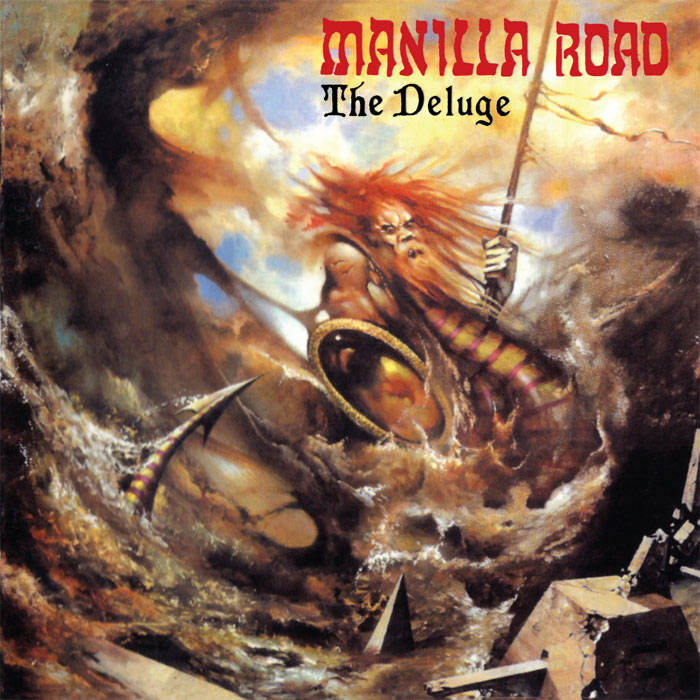
    Whether or not Manilla Road still was at their creative peak in the 80s is of little importance. The Deluge does not suffer from any one particular shortcoming, rather it is a weakening of all the strengths that make Manilla Road’s music great.

    Case in point, the lyrics are less florid, less epic, and while there is a case to be made for why this stripped down approach to songwriting was taken, I can guarantee you, if this was their format from them start of their career – the most well-known and well respected music Manilla Road has ever produced would only have a fraction of the majesty and excellence that made their budding underground releases so impactful.

    The songwriting itself is not bad, but they lift just as much from the canons of mid-era Bathory with a hint of Cirith Ungol as they contain their own touch. And there is still a distinct lean towards the grittier thrash sound that started on Open the Gates. The thrash metal influences are a lot clearer on this release, and they are appropriately accompanied by a down-toned and somber vocal delivery by Mark Shelton. Subject-matter is also a lot darker, and we see a more ballsy stance being taken against religion, with the poets lambasting specific historic ills in their verse. Its no longer just “religion is illogical” or “Religion is slavery” it’s “the church burned heretics” and “this holy war is considered a national disgrace to this day”. It is always nicer when bands take a specific stance when they begin making music with more venom.

    Although there is a cost to this change in their music. There is a more lemming-like tendency for songs on this album to entrench themselves firmly in 80s underground metal orthodoxy. And in truth, Manilla Road’s strength has always been that they can deliver the goods without being constrained by the comfort zone of other metal bands.

    That being said, Manilla Road are far from creatively spent. They still have some excellent riffs, and their are even some moments of excellent atmospheric keyboard interludes – which more than justifies the instrument the band has historically distanced themselves from.

    Overall, the Deluge is an album of experimentation for Manilla Road, much like Invasion was. And as we go forth into the middle of a new decade for the Kansas outfit,we will hopefully see a whole new sound for Manilla Road emerge. But only time will tell if it holds a candle to what came before.

    I would recommend this album for any fan f 80s Metal really, since it plays it so safe, but there are some qualities that could be used to get the Thrash audience appreciating the more traditional sensitivities of Manilla Road.
  • Retrospective: Open the Gates

    By: Manilla Road

    Original Date: December 1984

    Rating: 4.5/5

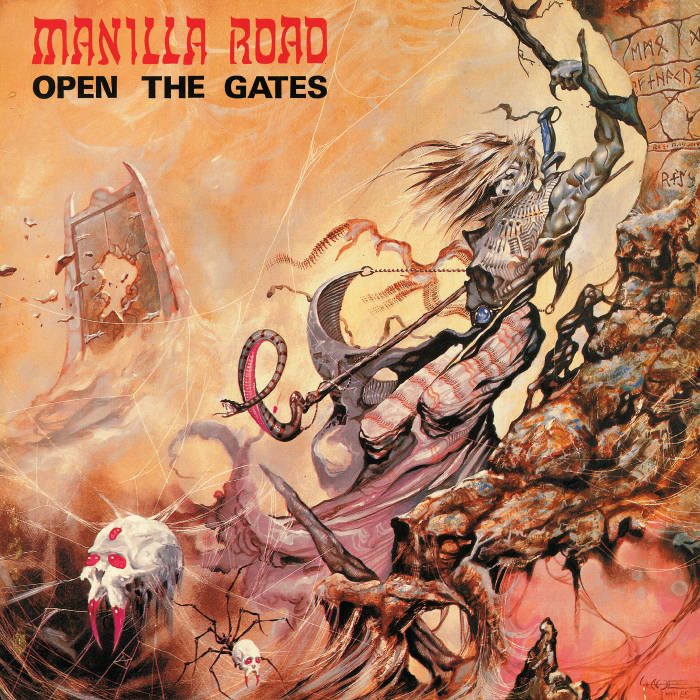
    Compared to the albums that preceeded it, Open the Gates takes a slightly different direction. Far from being the upbeat, somewhat noodle happy guitar riff-fest we had before, this album is a grittier and harsher with distinct thrash influences that occasionally crop up.

    Once more Manilla Road scoffs at formula and repetition, while the riffs aren’t the most varied and progressive if you played me three seconds from any song on this album, I would instantly be able to name the song its from. Each song has its own tone and feel, and with tracks like “Witch’s Brew” and “the Ninth Wave”, Manilla Road make it clear that they can still produce brooding and somewhat sinister tracks for the sake of narrative purpose.

    “What of the lyrics?” I hear readers ask. “Does Manilla road still engage in their usual pulpy cheese when they compose their lyrics?” Well if you are inclined to only take a band seriously who write serious lyrics, then yes, you will not be disappointed with Manilla Road’s Open the Gates. The lyrics are a bubbling druidic cauldron of inspiration with reagents taken from Viking myth alongside Arthurian lore and even astrology. There is even a few references to Roman mythology. If we look at the kind of influences Manilla Road was associated with later in their career, this album is the point where that world-building begins.

    As on all their past albums, Shelton delivers the vocals with conviction and confidence, and even if his voice isn’t the most pleasant on the ears, its honesty and flair is unmistakable. The production here isn’t as raw as the other extreme albums that came out around this era, and that just shows how much care Shelton and co took to deliver the best product possible. With it being an underground release from a small record label, it would be too easy to go for that cold raw feel of the First Wave of Black Metal, but instead all the instruments can be heard and the atmosphere hits home when it needs to.

    We also need to address the beginning of the change in the band’s musical direction. I don’t think it is a conscious change in sound to make the music more accessible. There is still too much of their trademark sound for that to be the case. I think Manilla Road has always been entrenched in the sound and mindset of “true metal”, and between the dominant forms of extreme metal developing at the time of this album’s release – the most clearly defined and firmly entrenched in Metal was Thrash Metal. Stuff like Death Metal was still largely experimental, and Manilla Road would never stoop to Hair Rock.

    Open the Gates is a great album, not as memorable or as iconic as Crystal Logic but it too punches way above its weight class in pound for pound intensity. I would recommend a listen to anybody as this is also part of Manilla Road’s peak as a band. If you enjoy good high voltage Metal, this is the Manilla Road release for you. No progressive frills, all gritty underground Metal.

  • Retrospective: Crystal Logic

    By: Manilla Road

    Original Date: December 1983

    Format used: Digital

    Rating: 4.5/5

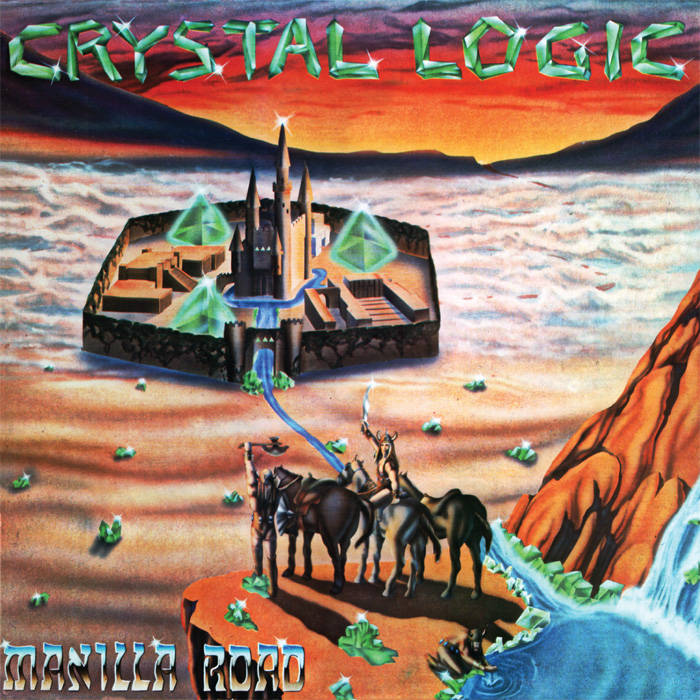
    Crystal Logic is perhaps the most widely respected album produced by the early Manilla Road simply in terms of how many covers exist for the songs, and how many latter day traditional heavy metal clones their formula. And the term formula is only used here in its loosest possible meaning. There really still isn’t a cookie cutter format like some weaker bands, nor is there a tendency to keep the sound uniform in terms of intensity. For this release Shelton and company still didn’t fear changing up the tone or atmosphere of individual songs to help with their overall effect or message. “Necropolis” and “the Ram” have radically different levels of heaviness for example. Also despite this album’s reputation of being fairly upbeat and epic, “Veils of Negative Existence” starts with some downright sinister laughter with a slow, drudging almost Doom Metal sounding number about the metaphysics of inner sorrows.

    We need to discuss more about this Doom Metal connection while we’re on the topic of “Veils of Negative Existence”. It is no secret that early Doom Metal bands and later ones with a traditional metal bend like the Gates of Slumber have flirted with Manilla Road’s catalogue. But surprisingly, the covers they choose are usually never for the most overt Doom Metal inspired tracks. And I think the fact that such a small band can gain the respect of musicians firmly rooted in other genres is testament to the creativity and the musical chops of Manilla Road in this era.

    And while the music itself does sound fairly happy compared to the darker Metal of this time (this was around the start of the First Wave of Black Metal after all), the lyrics themselves – when not too overtly intellectual and cerebral – have a tendency to cover dark, cynical, and at times macabre imagery. But that is the main weakness of this album – though it largely depends on how obvious a listener wants their lyrics. Take the title track “Crystal Logic”: it is so symbolic that there is room for interpretation (or maybe its just a case of symbolic word salad gone to its extreme). However, it is fairly clear that the lyrics are a statement to distance the band from religion of all forms and a pledge of allegiance to “logic” (remember how we mentioned this was about when the First Wave of Black Metal would descend upon the musical landscape?). The lyrics are sometimes a little overly symbolic yes, but again as mentioned in one of my other reviews – you usually shouldn’t come to Metal songs expecting the lyrical equivalent of Shakespeare. Fundamentally however, the lyrics are the most clear room for growth on this album.

    Aside from the lyrical navel-gazing, this is undeniably the point where Manilla Road found their musical footing. And on this ground they planted their leaden sabatons and stood their ground unyielding – at least for a few years. When people picture the classic Manilla Road sound – this is what they imagine. There will be more albums using this sound before Manilla Road takes their forays into Thrash, but this album is the essence of their early charm, mixed with the polish of their later sensibilities. And it deserves its respect as a classic album unsullied by the mainstream.

  • Retrospective: Metal

    By: Manilla Road

    Original Date: August 16, 1982

    Format used: CD

    Rating: 3.5/10

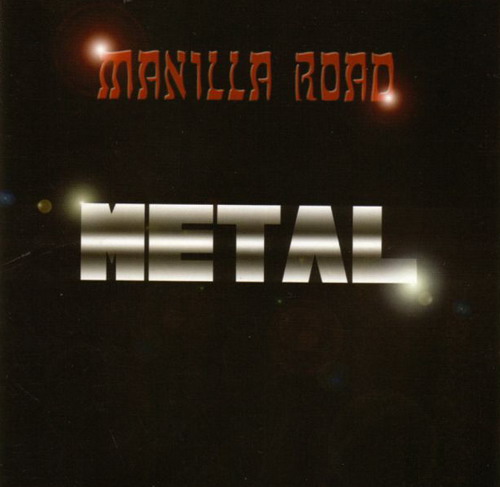
    Compared to the clearly more experimental Invasion, Manilla Road’s sophmore release Metal features a few standout tracks that contain the seed of greatness that we see fully realized on their next album. But we will get to that in due time. Overall, Metal is much more grounded in hard rock orthodoxy than the last release, and as a result, plays it safe musically. That is the bane of this album. There are some fantastic tracks that passionately capture the spirit of the age and tap into the most creative veins of Metal songwriting creativity. The title track, and the ethereal and genuinely imposing “Cage of Mirrors” come to mind. From these two tracks we see most of the innovation this album has to offer. Aside from that, we have fairly standard, if unusually heavy hitting hard rock riffing with some metallic ferocity sometimes coming in. The drumming here is also what NeoSpeed tryhards wish they could capture. If you listen to the songs you’ll know exactly what I mean. And I think it has to do with Manilla Road getting a new drummer at the time of this album’s release. We also see proof that Shelton and company are refining their craft because there is another version of “the Far Side of the Sun” on this release that actually feels more polished and properly edited. This album is still in that period of growing the beard musically. There’s an awkward growth, its long and scraggly and while there’s substance it has yet to become a well oiled and groomed mark of pride. Make no mistake, Manilla Road can be proud to release this album, but it is still a work of exploration in a way. And because there’s still a little bit of refinement to be done we see a lot of copybook riffs throughout the song which makes it fall just short of the caliber of Invasion.

    In terms of Manilla Road’s discography, weirdly enough, I will recommend Metal over Invasion, even if I do think Invasion is a better work overall. The reasons for this fairly nuanced, but I believe that since there is already a rerecorded version of one of the more ambitious songs off their last release, and since we get more into the heavy hitting sound that Manilla Road will deliver in the future, this album won’t be as jarring to fans listening to them. If listeners start with this album and skip invasion, you do still get a full picture of musical evolution since that early installment awkwardness is there, but it is a better taste for what the band arguably should sound like and doesn’t have the experimental deflection for more picky listeners. Like Invasion before it, Metal shows Manilla Road’s early hard rock sensibilities and inklings of that more clearly definied heavy metal sound they will become known for later. It is slightly more generic feeling, but its moments of excellence make the filler worth it. And though it has filler – I prefer Jambalaya over some generic fluff that could have been stuffed in the Turkey just for the sake of it. And the “filler” on Metal is the same tasty regional treat as a family recipe for Jambalaya.